 Former heavyweight boxing champion Muhammad Ali, the most important, complex and polarizing athlete of our time, died Friday night at an Arizona hospital. He was 74. He had suffered for decades from Parkinson's disease, a progressive neurological disorder, and was being treated in the hospital in recent days for a respiratory issue.
"After a 32-year battle with Parkinson's disease, Muhammad Ali has passed away. . . . The three-time World Heavyweight Champion boxer died this evening," Bob Gunnell, a family spokesman, told NBC News.
Ali may not have been the world's greatest athlete, or even the best boxer of all time - though he is certainly in both discussions. What is indisputable, though, is he was the most beautiful athlete we had ever seen, and likely ever will again - beautiful not so much in the common sense of physical attraction, but in the classical sense, the platonic sense.
He was beautiful in motion, the way he danced in the ring - the patented Ali Shuffle - as he circled another victim. And he was beautiful in complete stillness, as in the many iconic photographs of him: standing over Sonny Liston in 1965, his arm cocked in rage; leaning on the rope, glistening with sweat, during a break from training; delivering a devastating right hook to Joe Frazier; clowning with the Beatles; mugging for the camera.
Former heavyweight boxing champion Muhammad Ali, the most important, complex and polarizing athlete of our time, died Friday night at an Arizona hospital. He was 74. He had suffered for decades from Parkinson's disease, a progressive neurological disorder, and was being treated in the hospital in recent days for a respiratory issue.
"After a 32-year battle with Parkinson's disease, Muhammad Ali has passed away. . . . The three-time World Heavyweight Champion boxer died this evening," Bob Gunnell, a family spokesman, told NBC News.
Ali may not have been the world's greatest athlete, or even the best boxer of all time - though he is certainly in both discussions. What is indisputable, though, is he was the most beautiful athlete we had ever seen, and likely ever will again - beautiful not so much in the common sense of physical attraction, but in the classical sense, the platonic sense.
He was beautiful in motion, the way he danced in the ring - the patented Ali Shuffle - as he circled another victim. And he was beautiful in complete stillness, as in the many iconic photographs of him: standing over Sonny Liston in 1965, his arm cocked in rage; leaning on the rope, glistening with sweat, during a break from training; delivering a devastating right hook to Joe Frazier; clowning with the Beatles; mugging for the camera.
Friday, 3 June 2016
Muhammad Ali, 'The Greatest Of All Time', Dies At 74
Former heavyweight boxing champion Muhammad Ali, the most important, complex and polarizing athlete of our time, died Friday night at an Arizona hospital. He was 74. He had suffered for decades from Parkinson's disease, a progressive neurological disorder, and was being treated in the hospital in recent days for a respiratory issue.
"After a 32-year battle with Parkinson's disease, Muhammad Ali has passed away. . . . The three-time World Heavyweight Champion boxer died this evening," Bob Gunnell, a family spokesman, told NBC News.
Ali may not have been the world's greatest athlete, or even the best boxer of all time - though he is certainly in both discussions. What is indisputable, though, is he was the most beautiful athlete we had ever seen, and likely ever will again - beautiful not so much in the common sense of physical attraction, but in the classical sense, the platonic sense.
He was beautiful in motion, the way he danced in the ring - the patented Ali Shuffle - as he circled another victim. And he was beautiful in complete stillness, as in the many iconic photographs of him: standing over Sonny Liston in 1965, his arm cocked in rage; leaning on the rope, glistening with sweat, during a break from training; delivering a devastating right hook to Joe Frazier; clowning with the Beatles; mugging for the camera.

Thursday, 12 May 2016
Arsenal transfer news and rumours: Gunners eyeing THREE striker options?
 Lukaku "a fan of Arsenal"
 Speaking to The Set Pieces, Lukaku said: “Do I see myself as a Premier League-bound?
“I don’t know, but it’s a league that would suit me. I have always been a fan of Arsenal, but I am mad about every Premier League club as long as the club doesn’t have to fight against relegation.”
The 21-year-old currently plays for Oostende in the Belgian Pro League.
Arsenal could turn to Morata
Speaking to The Set Pieces, Lukaku said: “Do I see myself as a Premier League-bound?
“I don’t know, but it’s a league that would suit me. I have always been a fan of Arsenal, but I am mad about every Premier League club as long as the club doesn’t have to fight against relegation.”
The 21-year-old currently plays for Oostende in the Belgian Pro League.
Arsenal could turn to Morata
 Danny Welbeck's devastating injury blow could force Arsenal to step up their pursuit of a new striker, writes MirrorFootball's John Cross.
The England man has undergone surgery on his right knee after suffering a serious cartilage injury in Arsenal’s draw at Manchester City on Sunday.
The heartbreaking news comes on top of Welbeck missing 10 months with an injury to his other knee and he had only just returned in February.
It will also push the Gunners into the market this summer with Juventus striker Alvaro Morata their top target.
Arsenal have also looked at Inter Milan striker Mauro Icardi but if Morata - Real Madrid have a buy-back option which may push through the deal - becomes available then he will be their number one.
Gunners eye Guirassy
Danny Welbeck's devastating injury blow could force Arsenal to step up their pursuit of a new striker, writes MirrorFootball's John Cross.
The England man has undergone surgery on his right knee after suffering a serious cartilage injury in Arsenal’s draw at Manchester City on Sunday.
The heartbreaking news comes on top of Welbeck missing 10 months with an injury to his other knee and he had only just returned in February.
It will also push the Gunners into the market this summer with Juventus striker Alvaro Morata their top target.
Arsenal have also looked at Inter Milan striker Mauro Icardi but if Morata - Real Madrid have a buy-back option which may push through the deal - becomes available then he will be their number one.
Gunners eye Guirassy
 Arsene Wenger is eyeing a move for little-known French striker Sehrou Guirassy, writes MirrorFootball's John Cross.
Arsenal boss Wenger has been alerted to the 20-year-old Lille starlet, who has impressed while on loan at French second division club Auxerre.
In much the way the Gunners signed Yaya Sanogo from Auxerre three years ago at the same age, Guirassy is seen as one for the future.
Sanogo has started just two Premier League games and scored just a single goal for Arsenal, while being sent on loan to Crystal palace, Charlton and Dutch side Ajax.
Arsene Wenger is eyeing a move for little-known French striker Sehrou Guirassy, writes MirrorFootball's John Cross.
Arsenal boss Wenger has been alerted to the 20-year-old Lille starlet, who has impressed while on loan at French second division club Auxerre.
In much the way the Gunners signed Yaya Sanogo from Auxerre three years ago at the same age, Guirassy is seen as one for the future.
Sanogo has started just two Premier League games and scored just a single goal for Arsenal, while being sent on loan to Crystal palace, Charlton and Dutch side Ajax.
Wednesday, 11 May 2016
Around U : 3. Li-ion battery
LITHIUM- ION CELL
Li-ion cell is a rechargeable battery in which Li-ionoves between anode and cathode during charging and discharging.It is more popular than other batteries because of the various characteristics of lithium.Li has higher negative value for reduction potential and a lower atomic mass than any other metal.Only 6.94 g of Li is needed to provide one mole of electrons.
In typical litium ion cell ,the positive electrode is made by using a crystalline mixed oxide Li2O.Co2O3 or LiCoO2.The crystal contains both Li+ ion and Co3+ ion occupying the voids of the oxide array.Such crystals are usually synthesised by hydrolysis of the respective salt under hydrothermal condition.The negative terminal is made of graphite .The electrolyte is a solution of Li salt ,in an organic solvent such as ether or a solid phase polymer electrolyte which can transport Li+ ion.
Charging:-
During charging the cell act as an electrolytic cell,the electrical energy is converted into chemical energy.
At Anode (+) :
Some Li + ions get removed from the crystal lattice .and in the respective lattice site Co3+ ion get oxidized to Co4+ and electrical neutrality is maintained in the lattice.
At Cathode (-) :
The Li ion produced at the Anode get migrated through the electrolyte and get reduced to lithium atom at the graphite electrode.Li atoms are inserted between the layers of carbon atoms.This so called lithiated graphite , containing no Li metal as such.
Discharging
During discharging ,the cell acts as electro chemical cell,the chemical energy is converted to electrical energy.When the cell act as electrochemical cell ,LiCoO2 act as Cathode ,while the graphite act as anode.
Lithium ion cell is based on LiCoO2 has an EMF of 3.7 V.The cell is having high energy to weight ratio.They are used in cell phones,laptop computers,digital camera etc.The cell is not suitable for making large size of battery because of possibility of explosion.
Another type of Li-ion cell has been developed based on active materials like LiFePO4. The cell is having a potential of 3.3 v.The cell is suitable for making large size batteries suitable for automobile application.
Li-ion cell is a rechargeable battery in which Li-ionoves between anode and cathode during charging and discharging.It is more popular than other batteries because of the various characteristics of lithium.Li has higher negative value for reduction potential and a lower atomic mass than any other metal.Only 6.94 g of Li is needed to provide one mole of electrons.
In typical litium ion cell ,the positive electrode is made by using a crystalline mixed oxide Li2O.Co2O3 or LiCoO2.The crystal contains both Li+ ion and Co3+ ion occupying the voids of the oxide array.Such crystals are usually synthesised by hydrolysis of the respective salt under hydrothermal condition.The negative terminal is made of graphite .The electrolyte is a solution of Li salt ,in an organic solvent such as ether or a solid phase polymer electrolyte which can transport Li+ ion.
Charging:-
During charging the cell act as an electrolytic cell,the electrical energy is converted into chemical energy.
At Anode (+) :
Some Li + ions get removed from the crystal lattice .and in the respective lattice site Co3+ ion get oxidized to Co4+ and electrical neutrality is maintained in the lattice.
At Cathode (-) :
The Li ion produced at the Anode get migrated through the electrolyte and get reduced to lithium atom at the graphite electrode.Li atoms are inserted between the layers of carbon atoms.This so called lithiated graphite , containing no Li metal as such.
Discharging
During discharging ,the cell acts as electro chemical cell,the chemical energy is converted to electrical energy.When the cell act as electrochemical cell ,LiCoO2 act as Cathode ,while the graphite act as anode.
Lithium ion cell is based on LiCoO2 has an EMF of 3.7 V.The cell is having high energy to weight ratio.They are used in cell phones,laptop computers,digital camera etc.The cell is not suitable for making large size of battery because of possibility of explosion.
Another type of Li-ion cell has been developed based on active materials like LiFePO4. The cell is having a potential of 3.3 v.The cell is suitable for making large size batteries suitable for automobile application.
Takeaway: does plasma have super powers?

Amsterdam’s Fab City: urban solutions for tomorrow

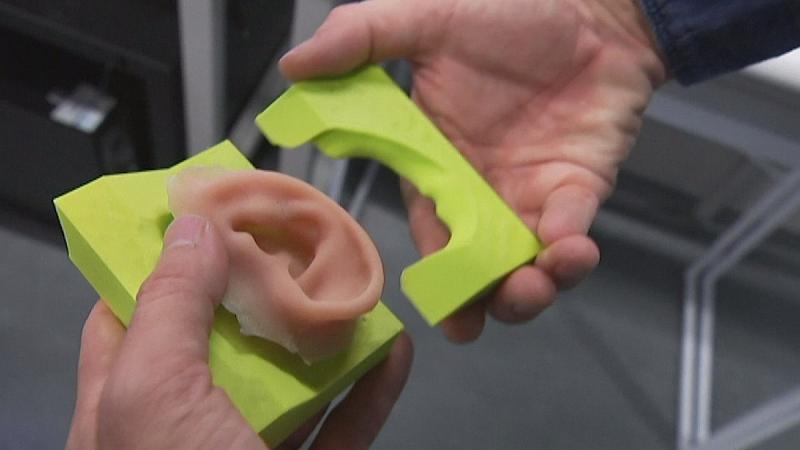
Girl to be fitted with 3D printed ear in Australia
Kiel students take Tetris to a whole new level

Subscribe to:
Posts (Atom)